Consumer safety
FDA Warnings on Illegal Diabetes Products: Hidden Drugs and Red Flags
FDA has warned companies that sold products claiming to treat diabetes, some labeled as dietary supplements. Its lab tests found hidden metformin, glyburide and phenformin in some of them. Hidden glyburide can cause severe low blood sugar, and phenformin was pulled from the U.S. market in 1978. Any product that promises to treat diabetes is a red flag.
Written by the GlucoZen editorial teamUpdated · 9 min read
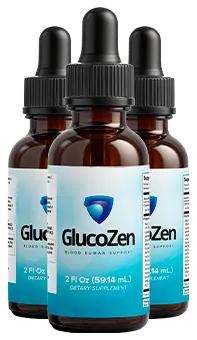
The warnings
What did FDA find in illegal diabetes products?
FDA found real prescription drugs hidden inside some products sold to people with diabetes. Its lab testing turned up undeclared metformin, glyburide and phenformin (FDA, Illegal diabetes products).
Some were sold as dietary supplements. Others were sold as ayurvedic remedies, homeopathic or over-the-counter drugs, or unapproved prescription drugs (FDA, Illegal diabetes products). All promised to treat diabetes.
FDA also warned that products like these can lead people to put off proper treatment (FDA, Illegal diabetes products).
These warnings were general. They did not name GlucoZen, and nothing in them points to a hidden drug in GlucoZen. The goal here is simpler: to help you read any blood sugar product with a sharp eye.
The risk
Why are hidden diabetes drugs so dangerous?
The biggest short-term danger is a low. For many people with diabetes, low blood sugar means a reading below 70 mg/dL (NIDDK, Hypoglycemia). Insulin, sulfonylureas such as glyburide, and meglitinides are the medicines most tied to lows (NIDDK, Hypoglycemia).
Signs of a low
- Shakiness, hunger or dizziness
- Confusion or irritability
- A fast or irregular heartbeat
- Headache
Severe lows can cause loss of consciousness or a seizure (NIDDK, Hypoglycemia). Someone taking a hidden sulfonylurea may not spot a low in time.
A reading below 70 mg/dL with symptoms needs treatment at once, by your care plan. Very high readings with extreme thirst or confusion need prompt medical care too.
The second danger is slower: skipped checkups and delayed care, which FDA flags as a harm in itself (FDA, Illegal diabetes products).
Red flags
How can you spot an illegal diabetes product?
No single sign proves a product is illegal. Several together should stop you.
It says it treats or cures diabetes
Only a drug can legally claim to treat, prevent or cure a disease (FDA, Dietary supplements Q&A). A supplement that says it does is breaking the rules.
It offers to replace your medicine
Lines like "ditch your pills" are a warning. No supplement replaces prescribed diabetes treatment.
It works "like" a prescription drug
A product that acts just like metformin or insulin may contain a drug. FDA testing has found exactly that (FDA, Illegal diabetes products).
Proof is all testimonials
The FTC says testimonials alone do not support a health claim; it generally wants human clinical trials (FTC, Health Products Compliance Guidance).
Fake reviews often prop up these products. Our guide to spotting fake supplement reviews shows what to look for.
The rules
Can a supplement legally claim to treat diabetes?
No. A product sold to treat, prevent or cure a specific disease is regulated as a drug, because only a drug can legally make that claim (FDA, Dietary supplements Q&A). Supplements may describe support for normal body function, but not treatment of a disease.
FDA also does not approve supplements before sale. The maker and distributor carry the first duty for safety and honest labels (FDA, Dietary supplements Q&A).
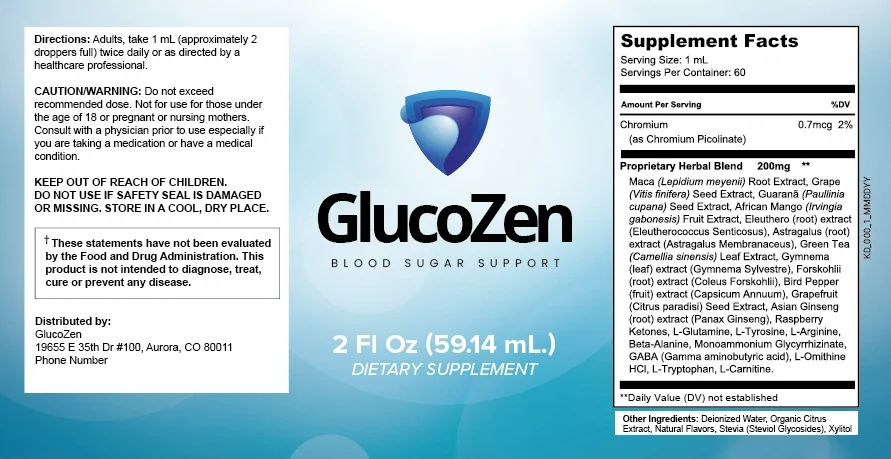
A proprietary blend must be named as one, with its total weight on the same line and its ingredients listed from heaviest to lightest. Nutrients with a Daily Value, such as chromium, must be listed on their own with their amounts (FDA, Labeling guide).
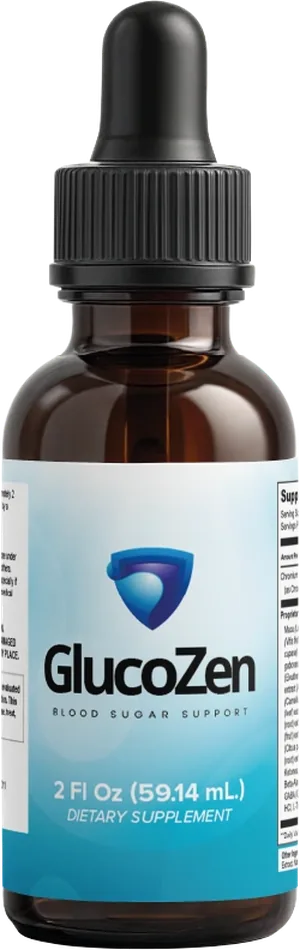
Try GlucoZen, 1 mL twice daily2, 3 or 6 bottles · ClickBank checkout · 60-day refund window
Order nowRead the label
What should a legal supplement label say?
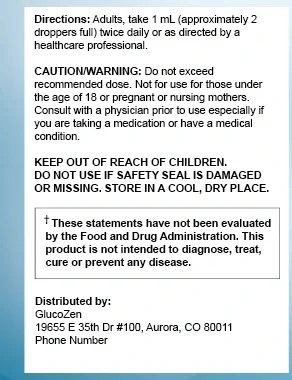
The GlucoZen directions panel makes a useful example. Tap the numbers to see each part.
- Directions
Adults, take 1 mL (approximately 2 droppers full) twice daily, or as a healthcare professional directs.
- Do not exceed
Do not exceed the recommended dose: 2 mL a day.
- Not for under 18 or pregnancy
Not for use under 18 or by pregnant or nursing mothers.
- Ask a physician first
Especially if you take a medication or have a medical condition, such as diabetes medicines.
- Children and seal
Keep out of reach of children. Do not use if the safety seal is damaged or missing.
- Storage
Store in a cool, dry place, with the dropper closed tight.
- FDA statement
Not evaluated by the FDA. Not intended to diagnose, treat, cure or prevent any disease.
- Distributor
GlucoZen, 19655 E 35th Dr #100, Aurora, CO 80011. The label prints "Phone Number" with no number.
Look for three things on any bottle: the FDA disease statement, a full ingredient list and a named distributor with a real address. Every line of GlucoZen's panel is typed out on the Supplement Facts page.
Where GlucoZen fits
How does GlucoZen's label compare with the red flags?
GlucoZen is sold as a dietary supplement with the front claim "Blood Sugar Support." Its label makes no treatment claim and carries the standard FDA statement.
Where the label does well
- A full ingredient list in weight order, as the rules require.
- Chromium listed with its amount: 0.7 mcg per 1 mL.
- The FDA disease statement is printed.
- A named distributor: GlucoZen, 19655 E 35th Dr #100, Aurora, CO 80011.
Where to stay careful
- The brand's marketing names ingredients the label does not list.
- 22 blend ingredients share 200 mg, with no single amounts.
- The label prints "Phone Number" with no number.
- No published trial of the product exists.
The marketing gap matters most. Always go by the bottle, and see the label versus marketing page for the full comparison.
If you are worried
What should you do if you took a suspect product?
Stop the product
Keep the bottle and the receipt so your care team can see the label.
Check your blood sugar
Test more often for a few days and write the readings down.
Call your clinician or pharmacist
Tell them exactly what you took and when. Keep your prescribed medicines as directed unless they tell you otherwise.
FAQ
Illegal diabetes products: common questions
What hidden drugs has FDA found in diabetes supplements?
FDA lab testing found undeclared metformin, glyburide and phenformin in some products sold to treat diabetes. Some were labeled as dietary supplements, others as ayurvedic, homeopathic or over-the-counter products. Glyburide can cause severe low blood sugar, and phenformin is linked to lactic acidosis.
Why was phenformin taken off the market?
Phenformin is an older diabetes drug that was removed from the U.S. market in 1978. FDA links it to lactic acidosis, a dangerous buildup of acid in the blood. Finding it hidden in a product sold for diabetes means buyers were exposed to a drug no longer sold here.
Is it legal for a supplement to say it treats diabetes?
No. Under FDA rules, any product sold to treat or prevent a specific disease is regulated as a drug, and only a drug can legally make that claim. A supplement may describe support for normal body function, which is a much narrower kind of claim.
How do I know if a blood sugar supplement is a scam?
Watch for promises to treat diabetes, offers to replace your medicine, claims that it works like a prescription drug and proof made only of testimonials. Several together are a strong warning. Check for a full ingredient list and a real distributor address.
Can hidden glyburide cause low blood sugar?
Yes. FDA says glyburide can cause severe low blood sugar. It is a sulfonylurea, one of the medicine types most tied to lows. Someone taking it without knowing has no reason to expect a low, so readings below 70 mg/dL with symptoms need treatment right away.
Does FDA test supplements before they go on sale?
No. FDA says it does not have the authority to approve dietary supplements before they are marketed. Makers and distributors carry the first duty for safety and labeling. FDA can act afterward, as it did with the warnings about illegal diabetes products.
Is buying diabetes medicine online without a prescription safe?
It carries real risk. FDA's warnings included unapproved prescription drugs sold for diabetes, along with supplements hiding drug ingredients. Without a prescription, no clinician checks the dose or how it mixes with your other medicines. Ask your pharmacist where to get your medicines safely.
Who wrote this
Written and reviewed by
Plain-language pages built from the label, the sales site and linked public health sources.
Last updated . Read our editorial standards and how we check reviews. This website is run by Theglucozen, a USA authorized GlucoZen retailer, not by the manufacturer. We earn money when you buy through our order links.
Keep reading
More about GlucoZen
Supplements and diabetes medicines
Which diabetes medicines raise the risk of lows, which supplement ingredients may add to them, and what to do.
Read more
Is it legit?
A fair verdict on GlucoZen: what checks out, the label-versus-marketing gap, and who should pass.
Read moreSupplement Facts
The whole GlucoZen label typed out word for word, with what each line means and what it leaves out.
Read moreUSA authorized GlucoZen retailer
Ready to try GlucoZen?
Pick a pack at checkout. 1 mL twice daily, 30 days per bottle. Refunds: 60 days from the ship date.
- ClickBank checkout
- 60 days from shipping
- Refunds: [email protected]