Ingredient profile
Licorice in GlucoZen: What Monoammonium Glycyrrhizinate Is and Who Should Be Careful
GlucoZen's blend lists Monoammonium Glycyrrhizinate, a salt of glycyrrhizin from licorice root, 18th of 22 ingredients. That place caps it at about 11 mg per 1 mL serving. It is most likely there for sweetness, not blood sugar. Glycyrrhizin is linked to high blood pressure and heart rhythm problems, so people with heart, kidney or blood pressure conditions should ask a clinician first.
Written by the GlucoZen editorial teamUpdated
On the label
Where is licorice on the GlucoZen label?
The word "licorice" never appears on the bottle. The ingredient is printed by its chemical name, Monoammonium Glycyrrhizinate, in 18th place in the 200 mg Proprietary Herbal Blend.
It comes after beta-alanine and before GABA. Blend ingredients run from heaviest to lightest (FDA, Labeling guide), so the 18th can weigh no more than 200 ÷ 18 mg. That is about 11 mg per serving, or about 22 mg a day at 1 mL twice daily. This is our math from the label order, not a lab test, and the real amount may be smaller.
| Label name | Monoammonium Glycyrrhizinate |
|---|---|
| What it is | A salt of glycyrrhizin, the sweet compound in licorice root |
| Type | Licorice-derived sweetener |
| Position on the label | 18 of 22 in the blend |
| Amount per serving | Not printed (at most about 11 mg per serving) |
| What research shows | Glycyrrhizin can cause heart rhythm problems, more likely with large amounts or long use |
| Strength of evidence | A safety flag, not a benefit |
| Why it is in the formula (brand view) | Probably sweetness and flavor |
| Main caution | People with high blood pressure, heart or kidney disease, or a salty diet should ask a clinician first. |
The basics
What is monoammonium glycyrrhizinate?
It is a salt form of glycyrrhizin, the very sweet compound found in licorice root. Glycyrrhizin is also the part of licorice that carries the safety warnings (NCCIH, Licorice). So a long chemical name does not make it milder than licorice itself.
| Detail | On the label? | What we can say |
|---|---|---|
| Name | Yes: Monoammonium Glycyrrhizinate | A licorice-derived compound, not the whole root |
| Amount per serving | Not published | At most about 11 mg by its place in the list |
| Amount per day | Not published | At most about 22 mg at 2 mL a day |
| Purpose | Not published | Most likely sweetness and flavor |
| Warning about it | Not published | Only the general "consult with a physician" line |
Why it is there
Why would a blood sugar supplement contain licorice?
The brand does not explain it. The ingredient's nature points to taste.
Sweetness
Glycyrrhizin is intensely sweet. It sits beside stevia and xylitol, which also sweeten the drops without sugar.
Not a blood sugar herb
No source we use ties it to blood sugar benefit. The ADA does not recommend herb supplements for glucose at all (ADA, Standards of Care 2026).
A safety flag
It adds a blood pressure and heart rhythm caution that a plain sweetener would not.
The other sweeteners are covered on the xylitol and stevia page.
Directions and warnings
What does the GlucoZen label say about medical conditions?
Tap spot 4. It is the only warning on the bottle that touches the licorice issue.
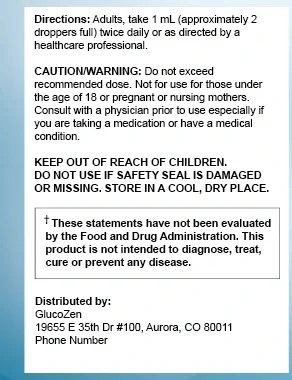
- Directions
Adults, take 1 mL (approximately 2 droppers full) twice daily, or as a healthcare professional directs.
- Do not exceed
Do not exceed the recommended dose: 2 mL a day.
- Not for under 18 or pregnancy
Not for use under 18 or by pregnant or nursing mothers.
- Ask a physician first
Especially if you take a medication or have a medical condition, such as diabetes medicines.
- Children and seal
Keep out of reach of children. Do not use if the safety seal is damaged or missing.
- Storage
Store in a cool, dry place, with the dropper closed tight.
- FDA statement
Not evaluated by the FDA. Not intended to diagnose, treat, cure or prevent any disease.
- Distributor
GlucoZen, 19655 E 35th Dr #100, Aurora, CO 80011. The label prints "Phone Number" with no number.
The label says to consult a physician before use, especially if you take a medication or have a medical condition. It does not name licorice, blood pressure or the heart. Treat high blood pressure, heart disease and kidney disease as exactly the kind of condition that line means.
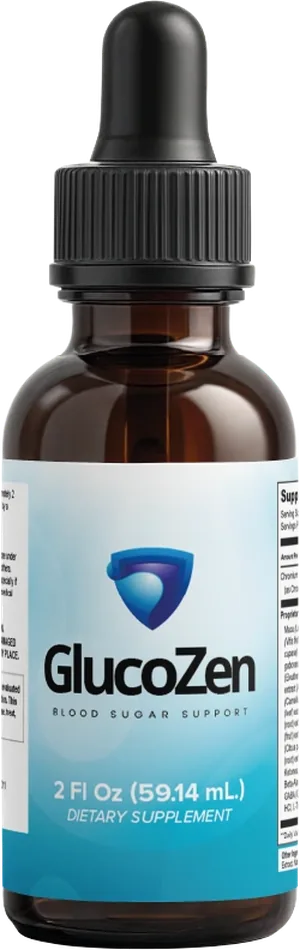
Try GlucoZen, 1 mL twice daily2, 3 or 6 bottles · ClickBank checkout · 60-day refund window
Order nowWho should ask first
Is the licorice in GlucoZen safe if you have high blood pressure?
Ask a clinician first. NCCIH says glycyrrhizin can cause irregular heartbeat and even cardiac arrest, and that even small amounts have been linked to severe effects in people with high blood pressure (NCCIH, Licorice). GlucoZen's share is small by position, but no source gives a safe floor for these groups.
High blood pressure
Even small amounts have been linked to severe effects in this group (NCCIH, Licorice).
Kidney conditions
The same smaller-amount warning applies to kidney disease (NCCIH, Licorice).
A salty diet
High salt intake also raises the chance of trouble from smaller amounts (NCCIH, Licorice).
A racing or irregular heartbeat, or fainting, needs prompt medical attention. Stop the drops and tell the clinician what you take.
Dose and time
How much licorice is too much, and does long-term use matter?
The sources give no single number. NCCIH says serious effects are more likely with large amounts or long-term use (NCCIH, Licorice). Time matters here, because GlucoZen is sold in packs of up to six bottles, which is 180 days of use.
| Situation | What NCCIH says | GlucoZen angle |
|---|---|---|
| Large amounts | Serious effects more likely (NCCIH, Licorice) | At most about 22 mg a day by label order |
| Long-term use | Serious effects more likely (NCCIH, Licorice) | A 6-bottle pack lasts 180 days |
| High blood pressure | Even small amounts linked to severe effects (NCCIH, Licorice) | Ask first, and check your readings |
| Pregnancy | Large amounts are unsafe (NCCIH, Licorice) | The label already rules out pregnancy |
The full list of cautions is on the side effects page.
Practical steps
What should you check before taking GlucoZen with licorice in it?
Know your blood pressure
Use a recent reading. If it runs high, talk to your clinician before you start.
Count other licorice
Real licorice candy and other supplements can add more glycyrrhizin.
Bring the label
Show the full ingredient list at your next visit, with every medicine you take.
A wider fit check is on the who it's for page. Every line of the bottle is typed out on the Supplement Facts page.
FAQ
Licorice in GlucoZen: questions
Does GlucoZen contain licorice?
Yes, in compound form. The blend lists Monoammonium Glycyrrhizinate, a salt of glycyrrhizin from licorice root, in 18th place. The word licorice is not printed, so many buyers miss it. Its place caps it at about 11 mg per 1 mL serving.
What is monoammonium glycyrrhizinate used for in supplements?
Most often for sweetness and flavor. It is a salt of glycyrrhizin, a very sweet licorice compound. In GlucoZen it sits beside stevia and xylitol. The brand does not state its purpose, and no source we use links it to blood sugar benefit.
Can glycyrrhizin raise blood pressure?
It is linked to high blood pressure and heart rhythm problems. NCCIH says even small amounts have been tied to severe effects in people with high blood pressure, and that large amounts or long use raise the risk. Check with your clinician first if your pressure runs high.
Is GlucoZen safe for people with heart disease?
Ask your cardiologist or primary clinician first. The licorice compound can affect heart rhythm, and smaller amounts may affect people with heart conditions. Guarana and green tea add caffeine too. Bring the label to the visit so the whole list can be checked.
How much licorice is in a daily dose of GlucoZen?
The label does not say. By its place in the blend, it can be at most about 11 mg per serving, or about 22 mg across the two daily servings. That figure is a ceiling from the label order, not a measured amount.
Is the licorice in GlucoZen a problem for kidney disease?
It can be. NCCIH says people with kidney conditions may be affected by smaller amounts of glycyrrhizin than other people. Anyone with kidney disease should ask a clinician before taking any product that lists a licorice compound, including GlucoZen.
Can I eat licorice candy while taking GlucoZen?
Real licorice candy can contain glycyrrhizin, so it adds to what the drops supply. Long or heavy use raises the risk. If you enjoy it often, or have blood pressure, heart or kidney concerns, tell your clinician you take both.
Who wrote this
Written and reviewed by
Plain-language pages built from the label, the sales site and linked public health sources.
Last updated . Read our editorial standards and how we check reviews. This website is run by Theglucozen, a USA authorized GlucoZen retailer, not by the manufacturer. We earn money when you buy through our order links.
Keep reading
More about GlucoZen
Side effects
Low blood sugar, caffeine, licorice, green tea extract and pet risks: each GlucoZen caution, and when to stop.
Read moreXylitol and stevia
The sweeteners and base behind the drops, what they mean for people, and why xylitol is a real danger to dogs.
Read moreWho it's for
The label's limits, the health conditions that call for a clinician's advice first, and a quick five-question fit check.
Read moreUSA authorized GlucoZen retailer
Ready to try GlucoZen?
Pick a pack at checkout. 1 mL twice daily, 30 days per bottle. Refunds: 60 days from the ship date.
- ClickBank checkout
- 60 days from shipping
- Refunds: [email protected]